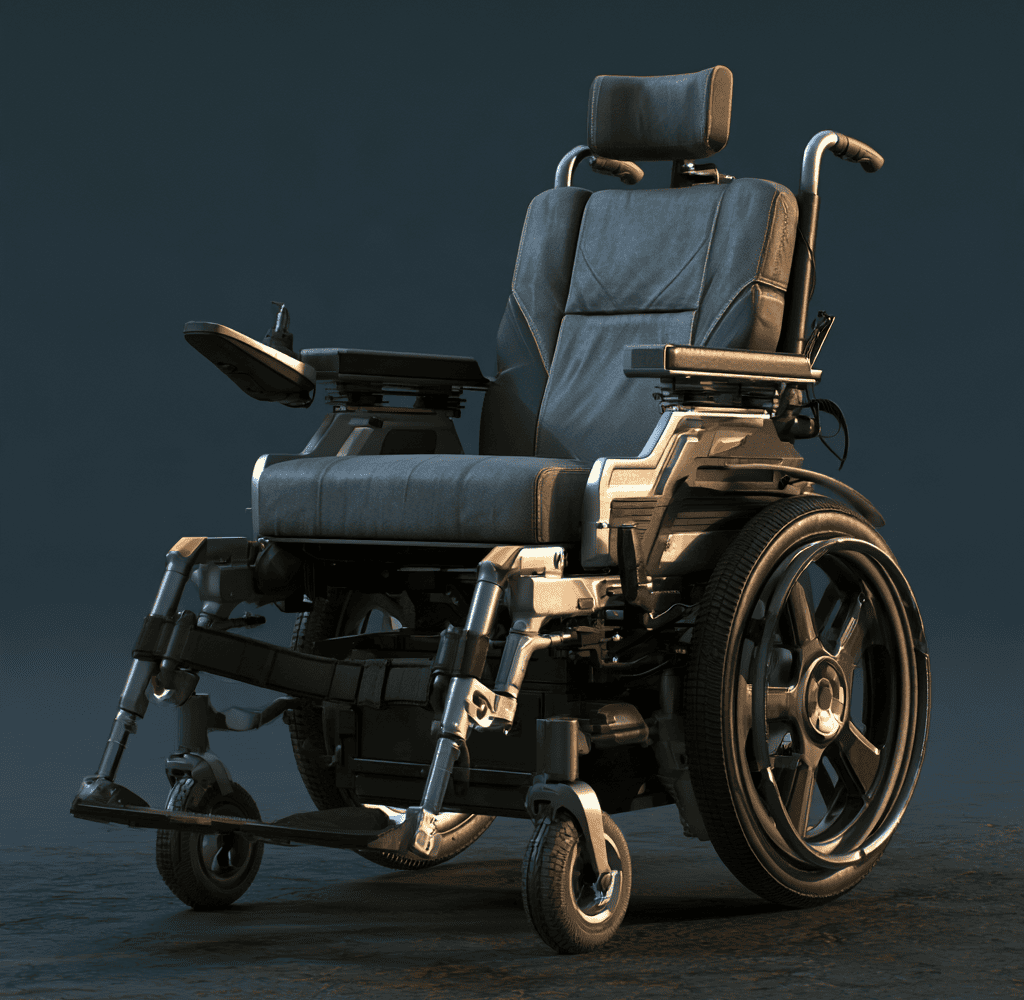
There is a profound shift that happens when a person first glides across a room in a modern electric wheelchair—not just in physical location, but in how they see themselves. For many individuals living with mobility challenges, the journey from dependence to independence is not merely about getting from point A to point B. It is about reclaiming an identity, rebuilding self-esteem, and rediscovering the confident person they have always been. A modern electric wheelchair is far more than a mobility device; it is a powerful catalyst for personal transformation, a tool that quietly and consistently tells its user: you are capable, you are worthy, and you are in control of your own life.
The Emotional Weight Of Lost Mobility
 To understand the confidence that an electric wheelchair restores, one must first acknowledge what mobility loss takes away. When walking becomes difficult or impossible, the world begins to shrink. Social invitations are declined. Spontaneous outings become logistical nightmares. Everyday tasks require assistance, and with that assistance often comes a subtle but painful erosion of autonomy.
For Mandy, an RAF spouse whose life changed suddenly due to severe mobility challenges, the emotional toll was immense. In her manual wheelchair, she felt invisible. “People would speak to [my husband] and look right over me,” she recalls. “It has made a huge difference to my dignity” . This experience is not unique. Research on powered wheelchair use identifies a “period of adjustment” that users must navigate, during which their self-perception and the perceptions of others must be reconciled with their new reality . The device itself is not the problem—the problem is the feeling of being seen as less capable, less present, less oneself.
Reclaiming Independence, Rebuilding Identity
The arrival of a modern electric wheelchair interrupts this negative cycle. It hands control back to the user. For the first time in months or years, they can move without asking for help. They can leave the house on their own terms. They can decide where to go and when to return.
Grace, a 14-year-old living with congenital myopathy, describes this transformation with breathtaking clarity. Before her electric wheelchair, she relied on a manual chair she could not push herself. “I couldn’t go out with friends, and I missed out on so much,” she says. “Everyday things became exhausting, and I felt stuck—like I was just watching life happen around me.” Then came her purple electric wheelchair. “The day I went for the fitting was awesome; I was whizzing up and down the pavements, and for the first time in a long time, I felt totally free.” Her confidence grew with each passing day. “Every day I feel more confident using it, and I feel like I have my independence back” .
This is the heart of the confidence-building process: capability precedes belief. When a person experiences themselves succeeding—navigating a hallway, joining friends on a walk, entering a café independently—the evidence of their own competence accumulates. Self-doubt is gradually replaced by self-assurance.
The Science Of Self-Esteem And Powered Mobility
This transformation is not merely anecdotal. Research consistently demonstrates that powered wheelchairs have a measurable positive impact on psychological well-being. A study of individuals with motor neurone disease found that power wheelchair use positively influenced happiness in 63% of participants, self-esteem in 59%, and feelings of inclusion in 75% . Another study examining the psychosocial impact of wheelchairs found that powered mobility was associated with significant benefits, with independence in mobility identified as a key determinant of positive outcomes .
The mechanisms behind these benefits are both practical and profound. Practically, an electric wheelchair reduces physical exhaustion and pain, freeing energy for social interaction, work, and leisure. Psychologically, it restores a sense of agency—the fundamental belief that one’s actions can influence outcomes. When a person can choose to go to the park, visit a friend, or simply move to a different room, they are no longer a passive recipient of care. They are an active participant in their own life.
Dignity Restored, Connection Renewed
The social dimension of confidence cannot be overstated. Mandy, the RAF spouse, describes how her electric wheelchair changed not just her mobility but her relationships. “I can go out on my own now and I’m not relying on Martin to push me everywhere. People walk beside me now, not behind me.” The simple act of moving through the world at eye level, rather than being pushed from behind, restored a sense of equality and presence. “It has honestly given our marriage back,” she says. “We’re not stuck at home anymore. We can go out, laugh, have fun and spend proper quality time together. I feel like the old Mandy again” .
This concept—feeling like oneself again—is the ultimate measure of confidence restored. It is not about becoming a different person, but about reclaiming the person one has always been. The wheelchair fades into the background, and what remains is the individual: their personality, their humor, their relationships, their life.
The Confidence You Carry With You
A modern electric wheelchair does not change who you are. It removes the barriers that were preventing you from being who you are. It replaces dependence with autonomy, isolation with connection, and self-doubt with the quiet, unshakeable knowledge that you are capable.
Every journey across a room, every independent outing, every moment of moving through the world on your own terms is a small victory. These victories accumulate. They build a foundation of confidence that extends far beyond mobility—into work, relationships, and the simple daily act of living. The confidence an electric wheelchair builds is not borrowed from the device. It is yours. The device simply helps you find it again.